From Toy Trumpet to Venturi
From an early age, I developed a deep passion for engine technology, fluid dynamics, andaviation— especially gliding.
My very first “project” dates back to 1987: a self-made intake horn for the 20mm SI carburetor on my Vespa 150 Sprint. The base? A toy trumpet from a local shop, combined with a powdered sugar strainer from my grandmother’s kitchen — bonded together using 5-minute epoxy resin from my father’s glider workshop
At the same time, I began delving into the theory behind two-stroke engines. Initial modifications to the crankshaft to optimize intake timing soon followed. Naturally, a major engine failure wasn’t far behind — the tuition was expensive, and the learning effect rather modest.
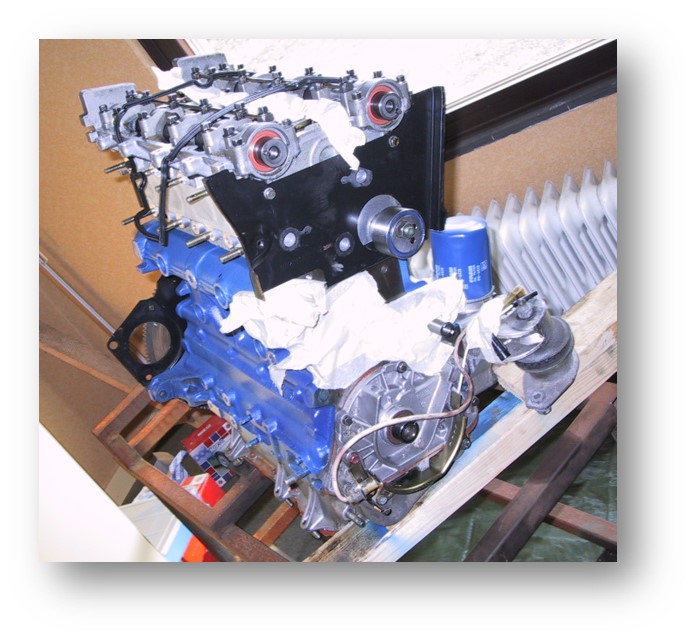
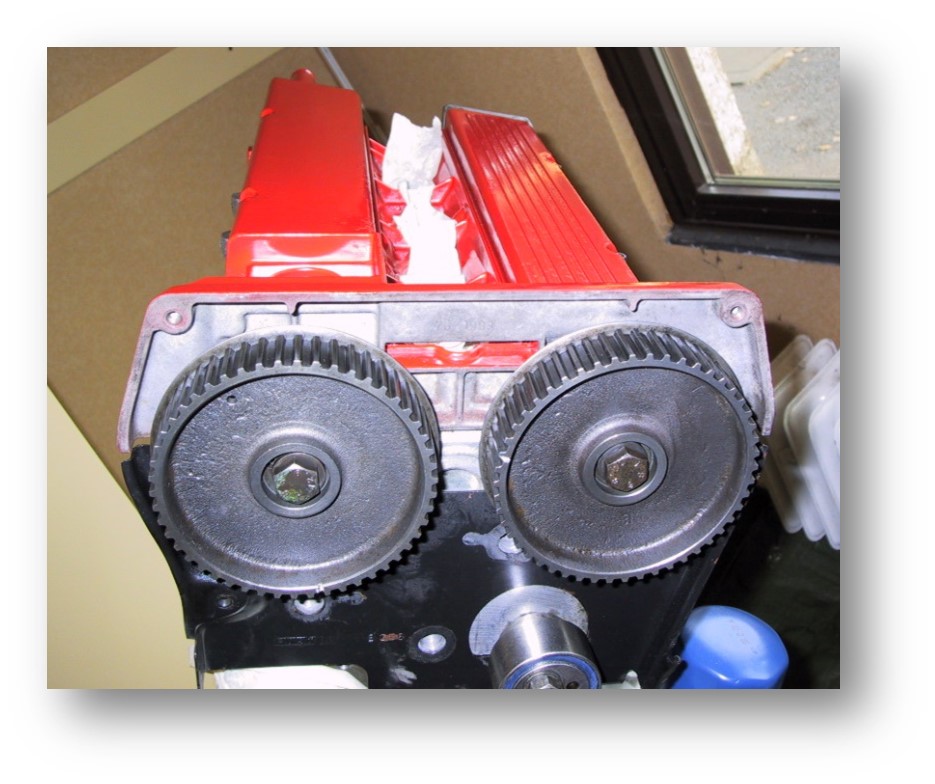
With my entry into the world of mechanical engineering—both academically and professionally—my focus gradually shifted to more complex four-stroke engines. This led to numerous motorsport-related projects: hill climb racing engines, customer builds, and personal developments. My Lancia Delta 1600 with crossflow head eventually produced 160 hp at 10,100 rpm. Later, my 2.0 16V Turbo Integrale delivered nearly 300 hp and 650 Nm of torque—measured on the test bench at Graz University of Technology.
In parallel, I remained deeply involved in gliding, both with full-scale aircraft and in the world of model flight. In my father’s 100 m² aircraft workshop, I built numerous F3B, F3F, and flying wing models.
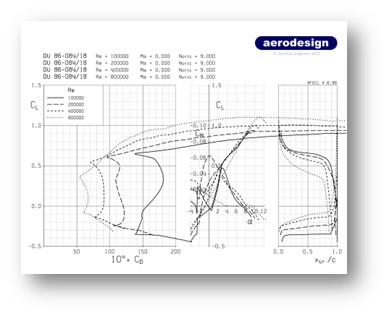
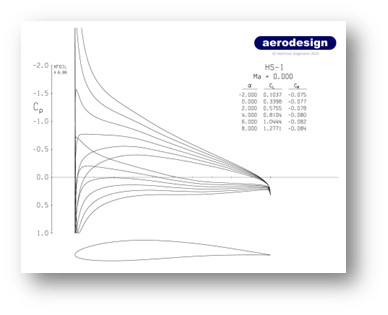
Boundary layer fences, vortex generators, sharkskin textures, and dimpled surfaces (like a golf ball) weren’t just theoretical subjects—they were part of hands-on workshop experimentation.
Today, with the resurgence of the classic Vespa scene and the fascinating potential of modern tools like 3D printing and CFD—even for SI carburetors—a full circle has been completed for me.
The foundations laid back then, now enriched with extensive experience in design, 3D CAD modeling, composite materials and metalworking, as well as fluid dynamics and aerodynamics, flow into every new project.
My ambition: technical perfection, driven by a genuine passion for what engines and airflow can achieve.
The development – optimization of tuning parts for the SI carburetor
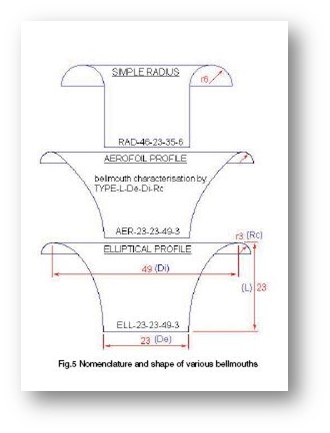
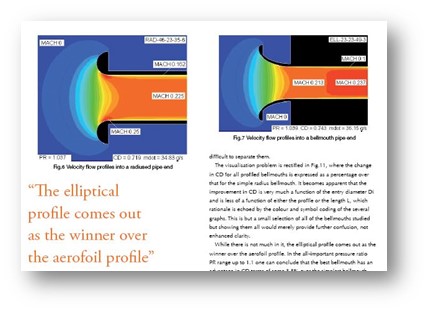
There is now a wide range of tuning components available for the SI carburetor: various carburetor tops with and without auxiliary intakes, venturis with or without swirl generation, and numerous jet and atomizer combinations — each with its own advantages, but also room for improvement.
As someone who regularly works on engines, tunes them, and performs lambda-based adjustments, I’ve spent considerable time thinking about how these components could be further refined.
My primary goal is to develop tuning parts that are not only performance-oriented but also practical and user-friendly in real-world applications.
The following points were the main focus during development:
- Easy Assembly: Workshop-friendly design for quick installation
- Fast Opening and Swapping: No unnecessary screw work
- Two-Part Tops Allow for Continuous Venturi Jets: Optimized flow into the carburetor
- Optimized Access to Jets: For efficient setup and quick adjustments
- Robust and Durable Construction: Withstands even harsh usage
- Modular Concept: Components can be individually expanded
- Minimized Internal Reflection: For improved airflow
- Avoidance of Standing Waves: Reduces unwanted mixture enrichment
- Customer Proximity & Ongoing Development: Feedback is directly integrated into further development
Extensive testing with ASA, ABS, and PETG materials, color variants, and manufacturing processes will ensure a selection of colors is available — upon request.
Technically optimized, visually customizable, and always with the goal of extracting the best performance from the SI carburetor.
The Venturi Philosophy – Efficiency Through Flow Optimization
The retrofitting of a Venturi element into the intake system of a carburetor engine is a topic of debate among technicians. Despite the presence of integrated Venturis in modern carburetors, experience shows that targeted retrofitting can significantly improve intake dynamics and thus engine performance. This white paper compares the underlying physical principles, illustrates the advantages with diagrams, and draws parallels to acoustics.
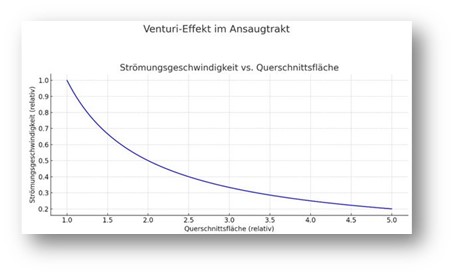
The Venturi Effect: Fundamentals A Venturi tube utilizes the continuity equation and Bernoulli’s principle to create a pressure drop while simultaneously increasing the flow velocity through a narrowing in the flow channel. This acceleration of the airflow directly impacts the air mass throughput and fuel mixture.
Flow Speed vs. Cross-SectionalArea: A simple physical model shows that as the cross-sectional area decreases, the flow velocity increases (see Diagram 1). This relationship is the foundation for applying the Venturi principle incarburetors.
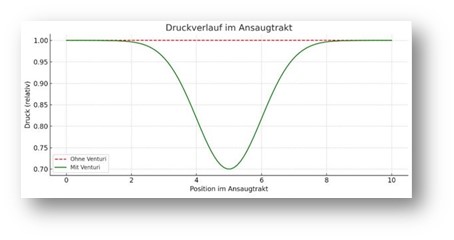
Pressure Profile in the IntakeSystem: In comparison to a constant pressure profile without a Venturi, a system with a Venturi shows a pronounced pressure drop at the narrow section (see Diagram 2). This enhances fuel intake and stabilizes the mixture formation, especially at higher RPMs.
Mass Flow and RPM:
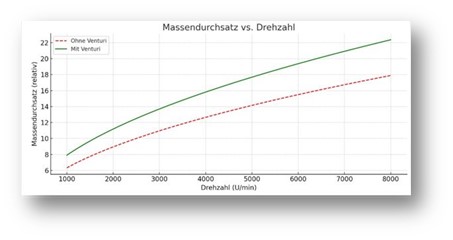
The mass flow curves (see Diagram 3) clearly show that a carburetor equipped with a Venturi allows for higher air throughput at the same RPM. This leads to better cylinder filling and thus increased power output.
Analogy to Speaker Technology:
In acoustics, it has long been known that an exponential or hyperbolic opening (such as in hornspeakers) improves energy transfer into the room. Similarly, a Venturi acts as an acoustic impedance matching device in the intake system—not for sound, but for fluids.
Conclusion:
A retrofitted Venturi can significantly optimize the intake system of an internal combustion engine. It offers a more dynamic behavior across the entire RPM range, improves efficiency, and allows for better tuning without the disadvantages of an oversized carburetor at lower RPMs.
Contact E-Mail: info@rk-tunings.at